
Indian Pilgrimage
Our Indian Pilgrimage
by Rev Dr Jonathan Gichaara
India is a land of striking contrasts: magnificent monuments celebrating love and remembrance stand alongside the severe poverty endured by families living beneath bridges, in railway stations and in makeshift settlements.
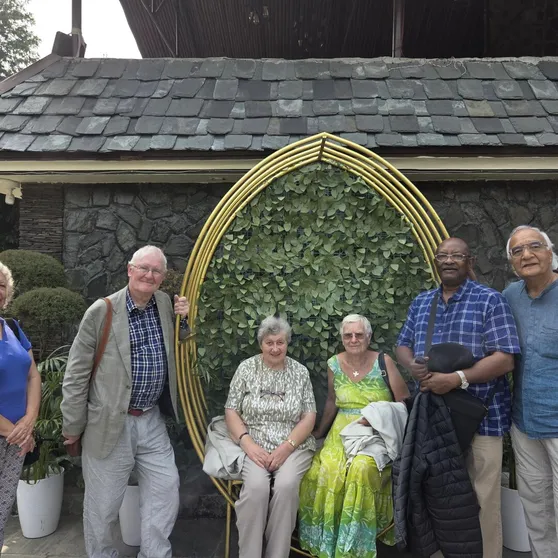
Seven Methodists from Methodists for World Mission (MWM) set out on a 14-day pilgrimage to northern India from 24 September to 7 October 2026. Our group was led by the Revd Dr Inderjit Bhogal, a former President of the Methodist Conference. Two days later, we were delighted to be joined by Sheila Norris, the Methodist Church in Britain’s Partnership Coordinator for Asia and the Pacific.
Monuments of Love and Remembrance
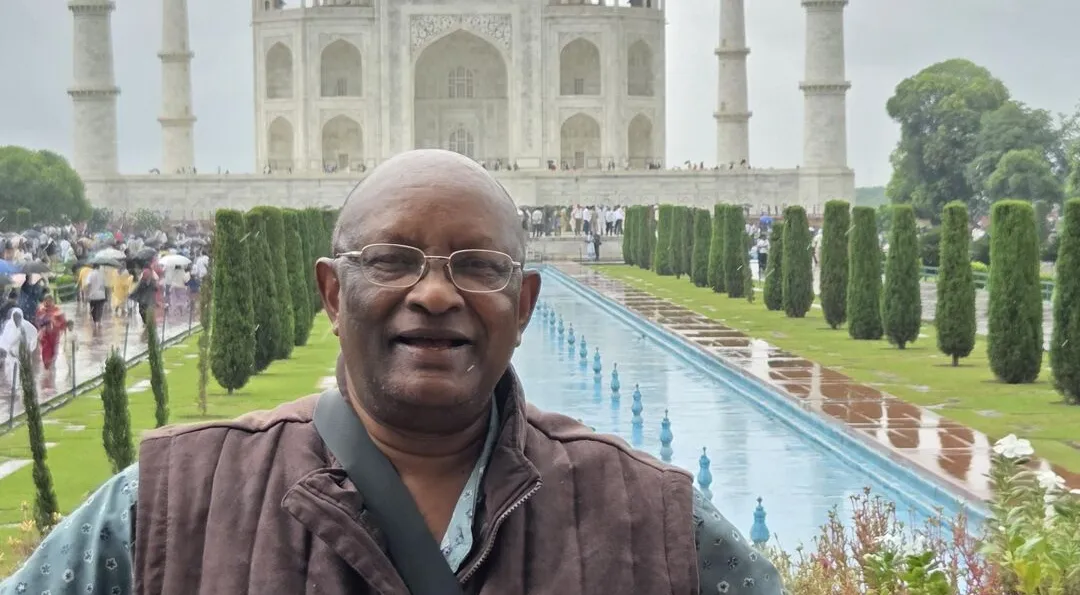
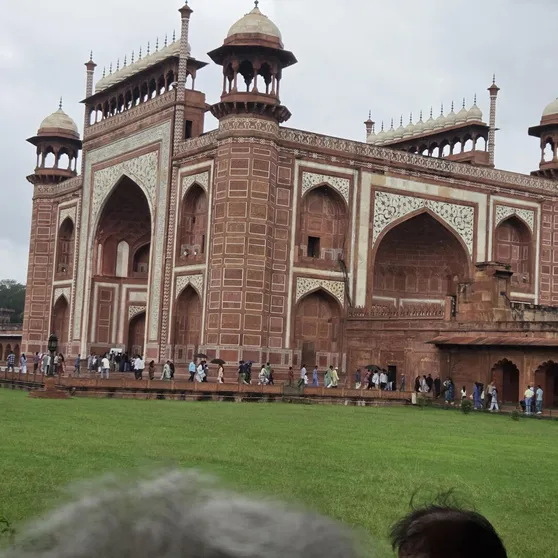
We began by visiting some of India’s best-known landmarks. The Taj Mahal was breathtaking—an extraordinary monument to love, loss, beauty and faithfulness.
Emperor Shah Jahan commissioned the ivory-white marble mausoleum in memory of his beloved wife, Mumtaz Mahal, who died in 1631, aged 38, after giving birth to their fourteenth child.
The Taj Mahal was inscribed as a UNESCO World Heritage Site in 1983 and was selected as one of the New Seven Wonders of the World in a separate public-vote initiative announced in 2007.
While the Taj Mahal was commissioned by a man to honour his wife, Humayun’s Tomb, on the outskirts of Delhi, was commissioned by a woman to honour her husband. Empress Bega Begum, Humayun’s first wife and chief consort, ordered the magnificent mausoleum after the second Mughal emperor died from injuries sustained in a fall on the stairs of his library after hearing the call to evening prayer.
Its symmetrical design, double dome and formal gardens influenced later Mughal architecture, culminating in the Taj Mahal. Humayun’s Tomb is also a UNESCO World Heritage Site.
Sharing Worship
On Sunday, 27 September, we worshipped at the Cathedral Church of the Redemption, part of the Church of North India (CNI). Its services include English, Tamil and Hindi worship. We observed practices that reflected the congregation’s Indian cultural setting, including the removal of shoes by those serving near the sanctuary, and we sang Tamil hymns and Moody and Sankey hymns set to Hindi tunes.
We encountered a similar style of worship the following Sunday at St Paul’s Church, a CNI congregation in Amritsar. The Revd John Howard preached, while several members of our group read Scripture or assisted with Communion.
During the service, a group of young people came to the altar for dedication. Afterwards, several worshippers asked us, as visitors, to pray with them individually.
According to India’s 2011 census, Christians numbered about 27.8 million, or 2.3 per cent of the population. Several Protestant denominations united to form the Church of South India in 1947 and the Church of North India in 1970.
We were privileged to visit the CNI headquarters, where the staff welcomed us warmly. Sheila Norris discussed matters of mutual interest between the Methodist Church in Britain and the CNI.
Visits in Delhi
On 28 September, before leaving Delhi for Punjab, we made two important visits: Gandhi Smriti and the British High Commission.
Gandhi Smriti
Gandhi Smriti preserves relics, books, documents and memorabilia connected with Mahatma Gandhi and India’s struggle for independence.
On 30 January 1948, Gandhi was assassinated by the Hindu nationalist Nathuram Godse as he walked towards the prayer ground. Gandhi was 78 years old.
The house in which Gandhi spent his final 144 days is now a national museum. A poignant trail of concrete footprints across the lawn marks his last walk towards the prayer ground. The place where he was assassinated is marked by the Martyr’s Column.
Courtesy Call on the British High Commission
Our early-morning visit to the British High Commission was an exciting occasion. Jude Muxworthy, Minister Counsellor for Political, Justice and Home Affairs, and two colleagues welcomed us warmly. Lindy Cameron was then the British High Commissioner to India; she left the post in October 2026 to become Permanent Under-Secretary at the Foreign, Commonwealth and Development Office.
We discussed a wide range of issues, including religious intolerance in India and the situation of refugees. Our conversation considered how the British Government might help address these challenges.
Journey to Punjab
We took a five-hour afternoon train from New Delhi to Ludhiana, one of the major cities in the northern state of Punjab. Punjab is one of India’s principal agricultural regions and a major producer of wheat and rice. Exhausted after the journey, we checked into the Hyatt Regency.
Sadhu Sundar Singh: The Christian Saint of India
The following day, 29 September, we visited Rampur, the birthplace of Sadhu Sundar Singh, whom many regard as the Christian saint of India. A Christian family welcomed us and explained that they had made it their vocation to preserve his memory and legacy.
Sundar Singh left an enduring mark on world Christianity, particularly on global mission. He advocated culturally appropriate and contextually relevant expressions of the gospel. In October 1906, as a young Christian, he put on the saffron turban and robe of a sadhu—an ascetic devoted to spiritual practice—and presented himself as a Christian sadhu. He followed in the footsteps of Christ with the resolve, “No turning back.”
He travelled widely on foot and became known as “the Apostle with the Bleeding Feet”. In 1929, he disappeared while travelling towards Tibet through the Himalayas; his fate remains unknown.
Visiting the Former Leprosy Hospital
After two nights in Ludhiana, we began the five-hour coach journey to Amritsar.
Along the way, we visited a former leprosy hospital and sanctuary that had been supported by Christian missionaries. The hospital building has since been converted into a family home, while an adjacent building is used for community gatherings.
Women’s Projects in Punjab
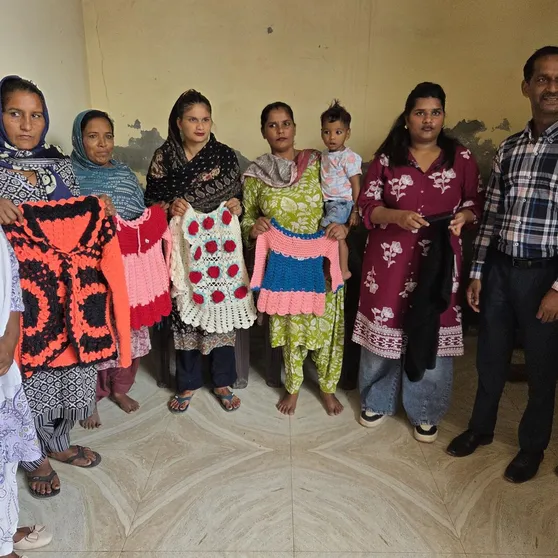
For me, the highlight of our pilgrimage was visiting two women-led projects among the rice and wheat fields near Ajnala, outside Amritsar.
These projects showed how lives are being transformed not only through the important support of Methodists for World Mission and other British Methodist initiatives, but also through the women’s sheer determination. They have organised themselves into small self-help microfinance groups, contributing money through a rotating savings arrangement to support one another.
Through these groups, some members have bought sewing machines and now earn income for their families. Others have purchased buffaloes and sell milk and cream. Some families have used group savings to build their first toilets, bringing greater dignity and improved sanitation to their homes.
Christian–Sikh Seminar
On 4 October, the Diocese of Amritsar, Church of North India, organised an interfaith seminar entitled “Naam Japa—The Recitation of the Name of God” at the DIT Memorial Resource Centre, under the auspices of the Baring Institute of Religious Studies in Batala. The seminar was held under the patronage of the Right Revd Manoj Charan, Bishop of Amritsar.
Dr Joginder Singh, a professor at Guru Teg Bahadur Central University in Bathinda, explained Naam Simran in Sikh spirituality. He described it not merely as the repetition of words, but as abiding in the omnipresent and indwelling God.
The Revd Dr Inderjit Bhogal presented a Christian perspective on Naam Japa. Drawing on the Jesus Prayer and the ancient Christian tradition of unceasing prayer, he described repetition as a means of deepening one’s relationship with God rather than as a mechanical ritual.
The Revd Dr Pulak Samantaroy, Principal of the Baring Institute of Theology, explored the relationship between Japa in Indian philosophy and the Christian practice of abiding in Christ.
The seminar emphasised that interfaith engagement is not about reducing religions to a common formula but about deepening mutual understanding and affirming our shared humanity.
The Golden Temple
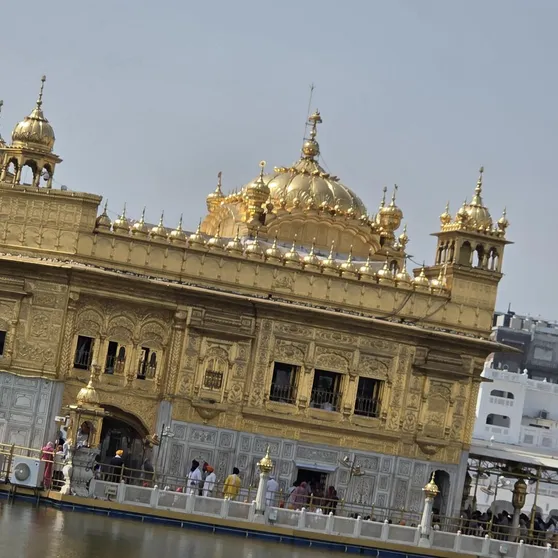
The Golden Temple, formally known as Sri Harmandir Sahib or Sri Darbar Sahib, is Sikhism’s foremost shrine. Located in Amritsar, it embodies equality and openness: its four entrances welcome people without distinction of caste, creed, sex or religion. The Guru Granth Sahib, the central scripture and eternal Guru of the Sikhs, is installed in the sanctuary.
The sanctuary stands at the centre of the sacred Amrit Sarovar, or Pool of Nectar. The city of Amritsar takes its name from this pool, whose excavation was undertaken by Guru Ram Das and completed in the sixteenth century.
Many devotees bathe in the Sarovar as an act of faith and purification. The shrine receives very large numbers of visitors each day, and its langar—the free community kitchen—serves an estimated 75,000 to 100,000 meals daily, with higher numbers at weekends and festivals.
Sri Harimandir Sahib has appeared on India’s UNESCO World Heritage Tentative List since 2004. Inclusion on that list is a preliminary step, but yet the shrine has not been inscribed as a World Heritage Site.
The Border Ceremony
The changing-of-the-guard ceremony at the Attari–Wagah border between India and Pakistan is both spectacular and entertaining.
The drill features elaborate, rapid, dance-like manoeuvres, with guards raising their legs as high as possible. It symbolises both the kinship and the rivalry between the two countries.
The flag-lowering ceremony takes place each evening shortly before sunset. It includes forceful calls from the border guards, high-stepping drills and the carefully coordinated lowering of the two national flags.
Reflection
Our pilgrimage revealed an India of striking contrasts: majestic monuments and deep poverty, ancient religious traditions and living Christian communities, national rivalry and gestures of fellowship. Above all, the journey showed us how faith, service and determination continue to transform lives.
Quick Links
Registered Charity no. 1129363
Get In Touch
admin@sheffieldmethodist.org
0114 270 9990 / 0114 430 0255
Sheffield District Office
Room 47, Victoria Hall Methodist Church
Norfolk Street
Sheffield
S1 2JB
